About Suction Pipe Clarifiers
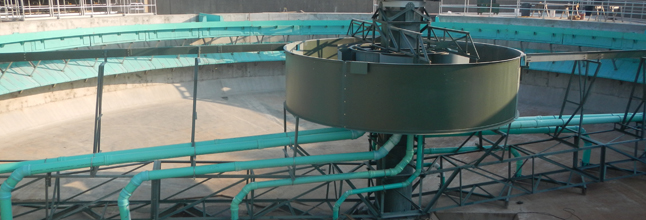
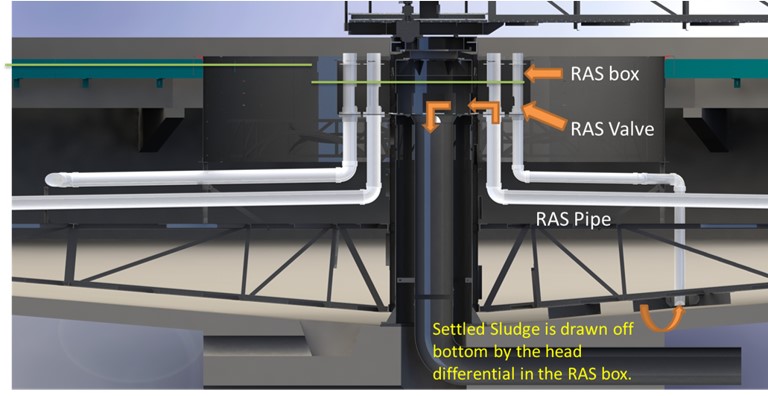
Suction or Riser Pipe design works by lowering the water level in the RAS box causing a head differential between the water level in the tank and the RAS box causing settled solids are drawn up from the tank floor into the RAS box. An adjustable orifice in the RAS valve allows the amount of settled solids to be optimized from the different locations of the clarifier bottom.
Blades on the rake arm are arranged in a “V” pattern to direct the collected sludge towards the Suction Pipe.
Suction or draw-off pipes are equally spaced along the rake arm to draw off settled sludge across the clarifier. Blades on the rake arm are arranged in a “V” pattern to direct the collected sludge towards the Suction Pipe. A RAS valve, located in the RAS Box, on each individual suction pipe allows the flow from each pipe to be adjusted to optimize the solids removal from the clarifier leading to potential higher RAS concentrations.
Advantages:
- Rapid removal of settled solids across the entire basin floor.
- Optimization of the flow removal across the clarifier bottom as process conditions change.
Disadvantages:
- Potential plugging of the suction pipes and, in
particular the valves. - A seal must be maintained between the rotating RAS
box the clarifier center column. - Highest capital cost of all clarifier designs.
- The required RAS valve box makes adding an Influent
Dispersion Well (IDW) or an Energy Dissipation Inlet
(EDI) difficult. - Many times the Suction Header Clarifier is not utilized
to its full potential due to the higher sophistication of
operation.
3D Models of Every Project
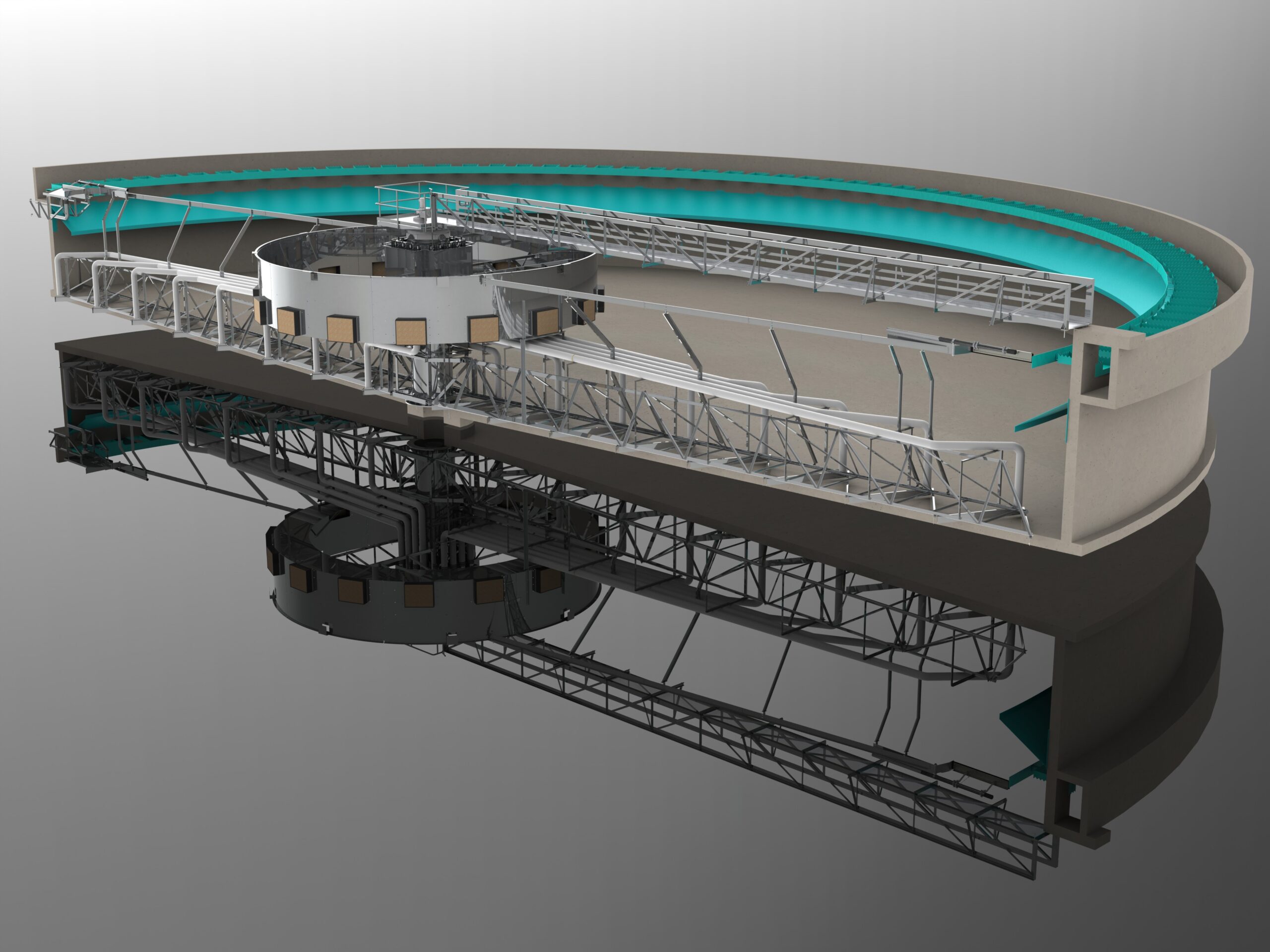
ClearStream develops a detailed 3D model for every unit manufactured, ensuring accurate fit-up and seamless integration with site-specific layouts. These models also serve as a valuable tool for operator training and system familiarization, providing clear insight into unit design and operation.
Clients are provided access to the 3D models, allowing them to view and manipulate the equipment from their own office or facility. This capability enables operations and maintenance personnel to virtually inspect the unit, plan maintenance activities, and understand internal components—without draining the tank or interrupting operation.
Continue to explore

Case Studies
Let’s Solve Your Process Treatment Challenge
+1 801 676 1890
info@clearstreameng.com
Speak with a ClearStream engineer about your process needs. We’ll help you identify the best solution for your system and application.