
About Suction Header Clarifiers
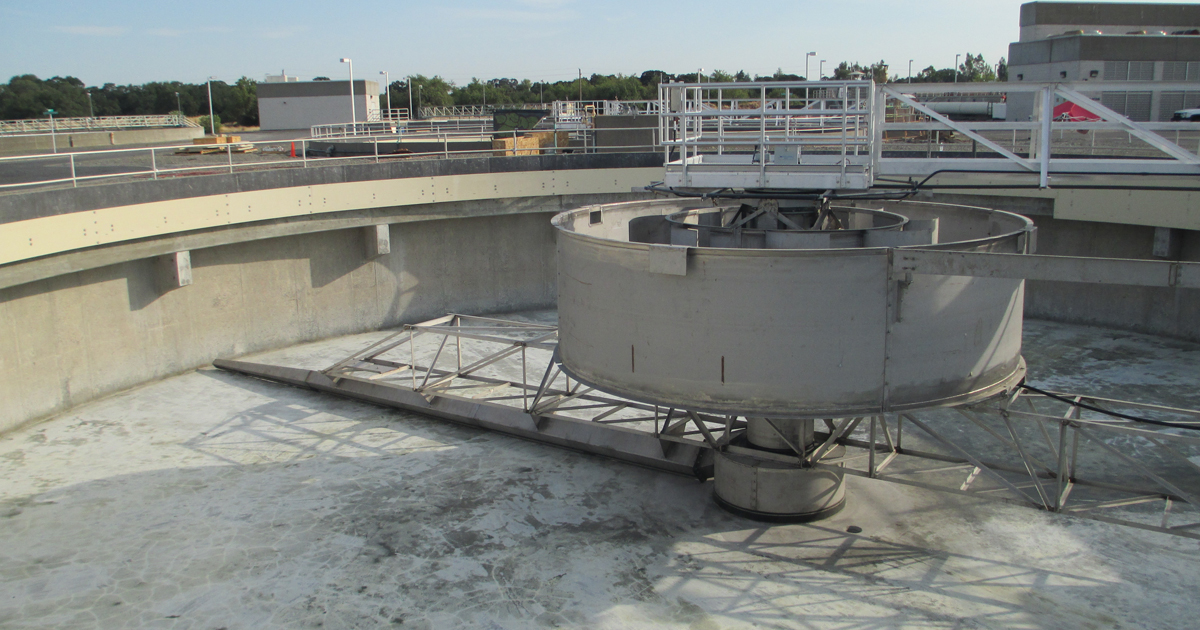
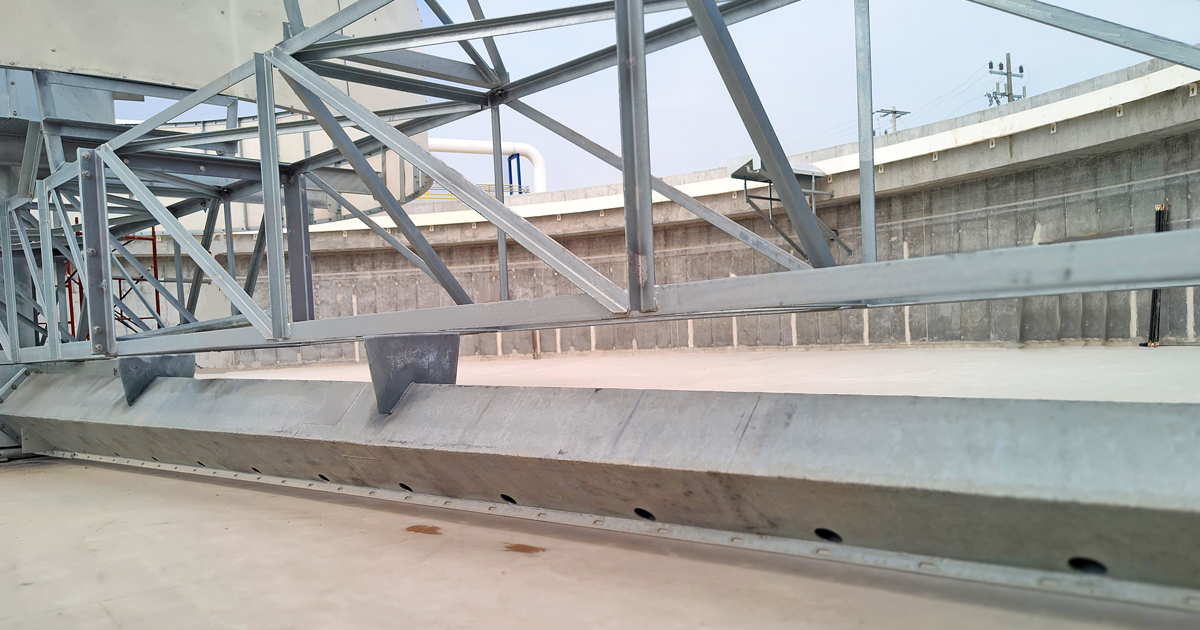
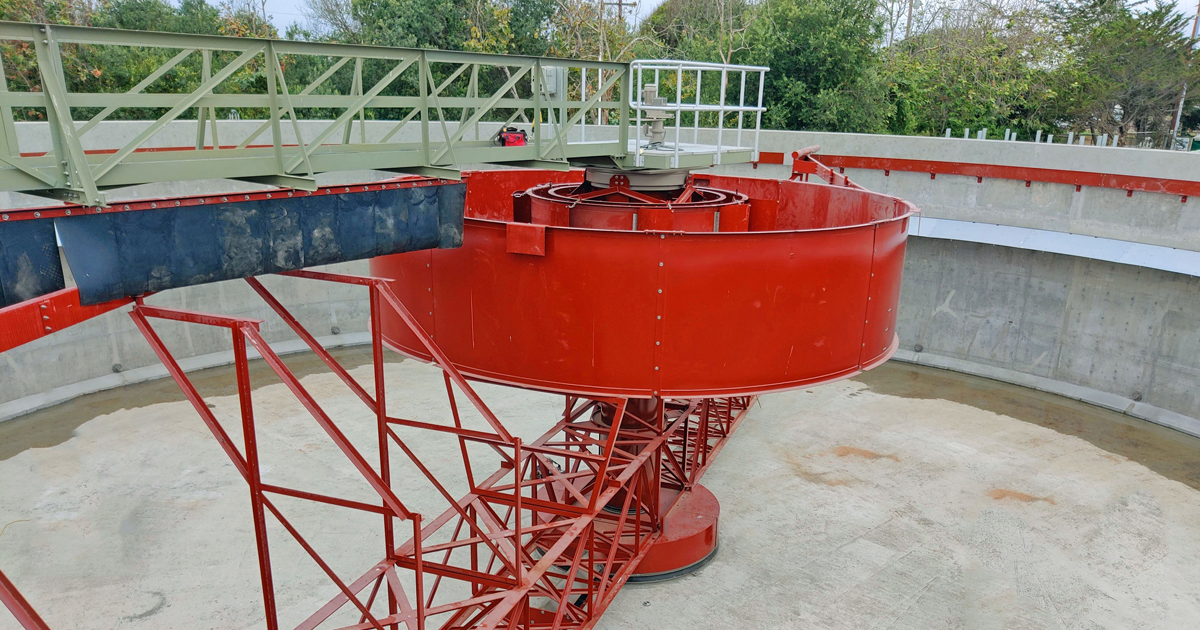
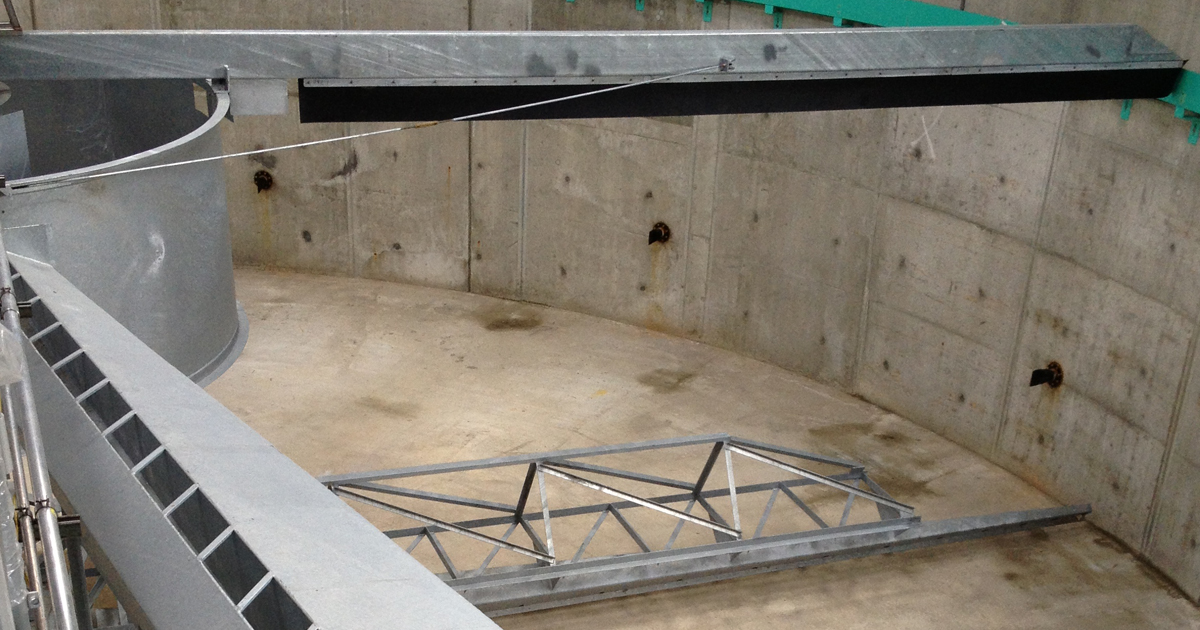
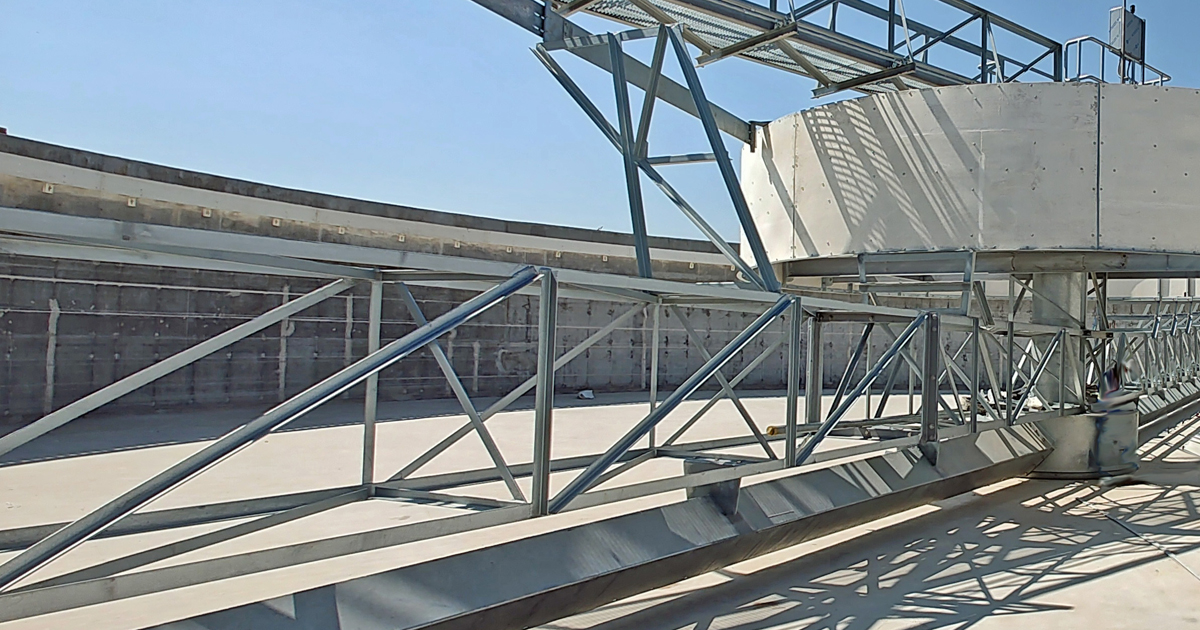
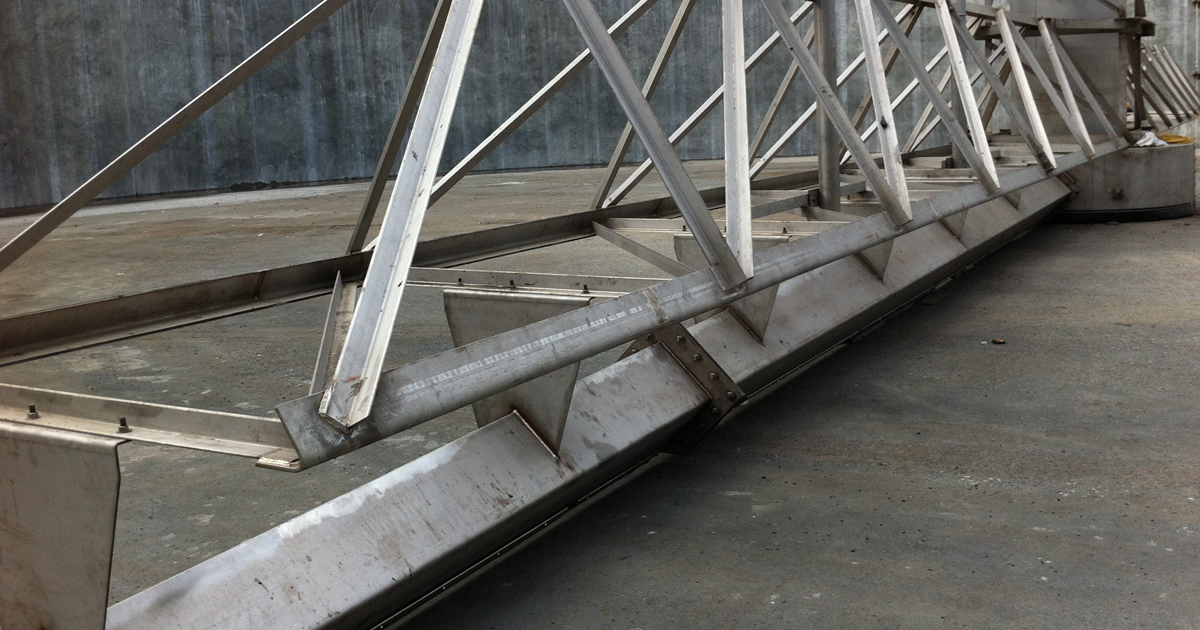
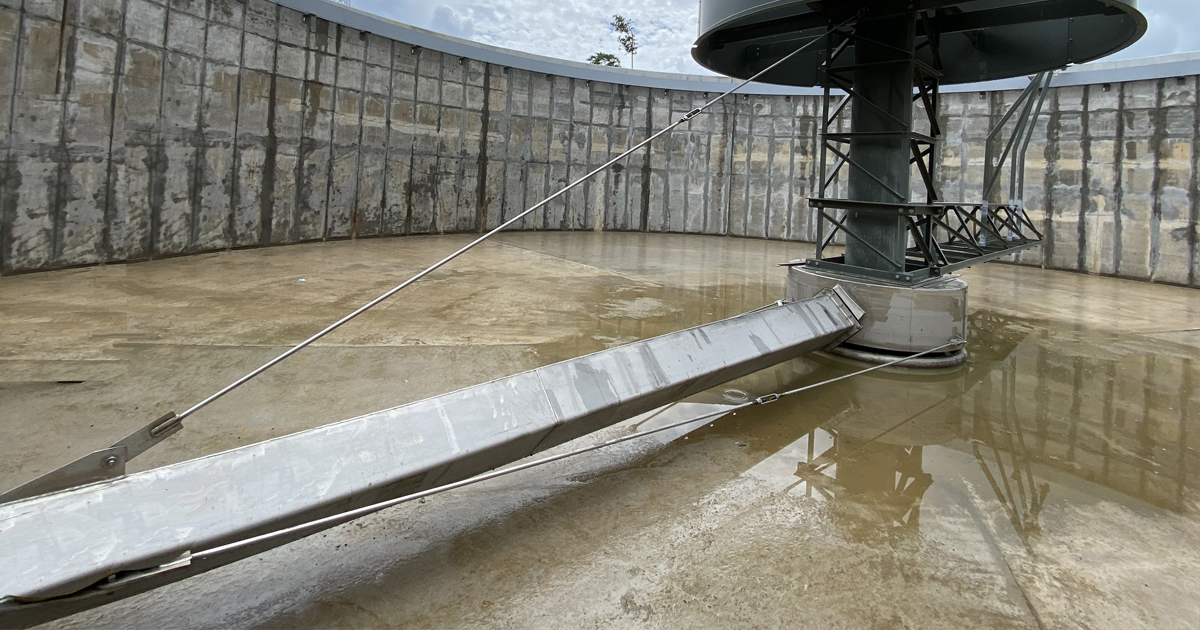
One or two round or square tapered headers stretch from a manifold radially across the bottom of the clarifier. Varying size and spaced orifices located in the leading edge of the suction header are designed to draw settled sludge at an even removal rate across the entire basin floor. Through pumping, or head differential, settled solids are drawn through the header into the manifold and out of the clarifier.
Header design starts with dividing the tank into annular rings then sizing the suction header holes to withdrawn the amount of sludge within that ring.
Hole size and ring width is adjusted to achieve a balanced withdrawal rate across the clarifier bottom.
Header size and hole size designed using an iterative process with CFD software to achieve flow balance without exceeding the minimum/maximum flow velocity throughout the header.
Advantages:
- Rapid removal of solids across the whole clarifier floor.
Disadvantages:
- Potential plugging of the suction header holes at low RAS removal rates.
- If the actual RAS flow rate is different than designed for, the header may draw solids at an uneven rate across the basin floor.
- Because the header draws equal to the area it rotates through, a
sludge blanket must be maintained over the entire clarifier deeper
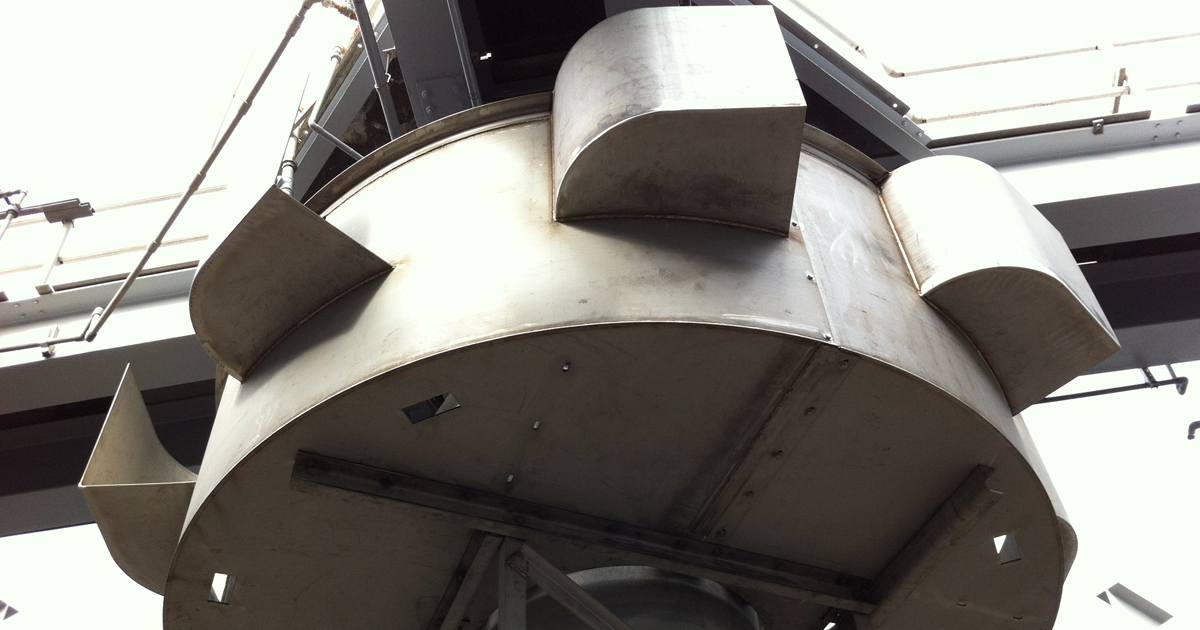
than the suction header. - A seal must be maintained between the rotating manifold, the clarifier
center column, and the tank floor. High head differentials for the
suction header may cause the seals to collapse or “suck in” rendering
them useless. - The seals must be replaced approximately every 5 – 7 years.
Variations:
- Install a segmented rake as one arm opposite the suction header to aid
in redistribution of the sludge on the bottom.
Built Right. Delivered Right. Supported Right.
3D Models of Every Project
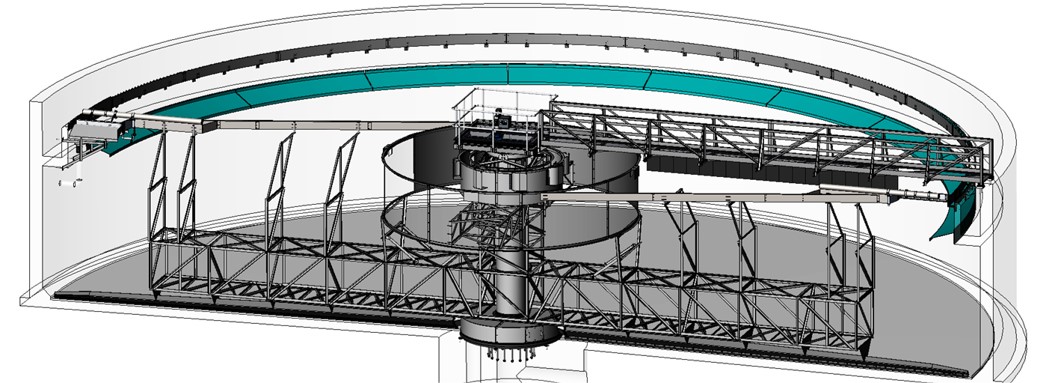
ClearStream develops a detailed 3D model for every unit manufactured, ensuring accurate fit-up and seamless integration with site-specific layouts. These models also serve as a valuable tool for operator training and system familiarization, providing clear insight into unit design and operation.
Clients are provided access to the 3D models, allowing them to view and manipulate the equipment from their own office or facility. This capability enables operations and maintenance personnel to virtually inspect the unit, plan maintenance activities, and understand internal components—without draining the tank or interrupting operation.
Continue to explore

Case Studies
Let’s Solve Your Process Treatment Challenge
+1 801 676 1890
info@clearstreameng.com
Speak with a ClearStream engineer about your process needs. We’ll help you identify the best solution for your system and application.