About ClearFlo Jet Aeration Systems
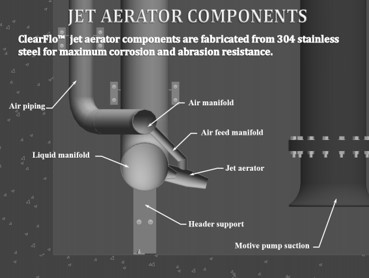
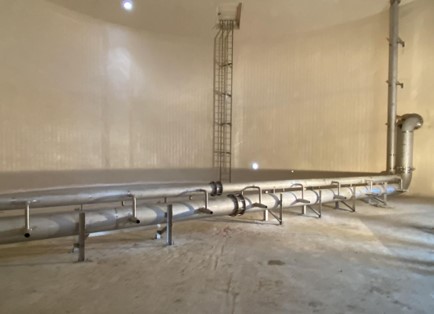
ClearFlo™ Jet Aeration Systems offer state of the art aeration and mixing for a wide variety of municipal and industrial wastewater and process applications.
Independent control of oxygen transfer and mixing, low installation costs, long life, high clean water transfer efficiency, high ”dirty water” transfer efficiency, low maintenance, thermal conservation, and clean operation (eliminates airborne volatiles), make jets the ideal choice for new facilities, as well as upgrades, and process optimization projects.
Independent Control of Oxygen Transfer and Mixing
Air flow to each jet aerator can be varied from 10 SCFM to 80 SCFM to control oxygen delivery, without affecting mixing; jet systems can be operated ungassed for anoxic mixing. Anoxic mixing improves nutrient removal and settling.
The Highest Oxygen Transfer Efficiency of Any Aeration System in Dirty Water
No Mist, Spray, or Splash
Walkways and Handrails Stay Clean. Odors and Airborne VOCs are Reduced or Eliminated.
Thermal Conservation
Submerged Release of Warm Compressed Air, and Lack of Splashing Eliminates Freezing Problems, Even in the Coldest Climates; Allows Year-Round Nitrification/Denitrification.
Low Maintenance
Simple Five Minute. Backflushing Operation is the Only Required Maintenance
No Mist, Spray, or Splash
Walkways and Handrails Stay Clean. Odors and Airborne VOCs are Reduced or Eliminated.
Independent Control of Oxygen Transfer and Mixing
Air flow to each jet aerator can be varied from 10 SCFM to 80 SCFM to control oxygen delivery, without affecting mixing; jet systems can be operated ungassed for anoxic mixing. Anoxic mixing improves nutrient removal and settling.
3D Models of Every Project
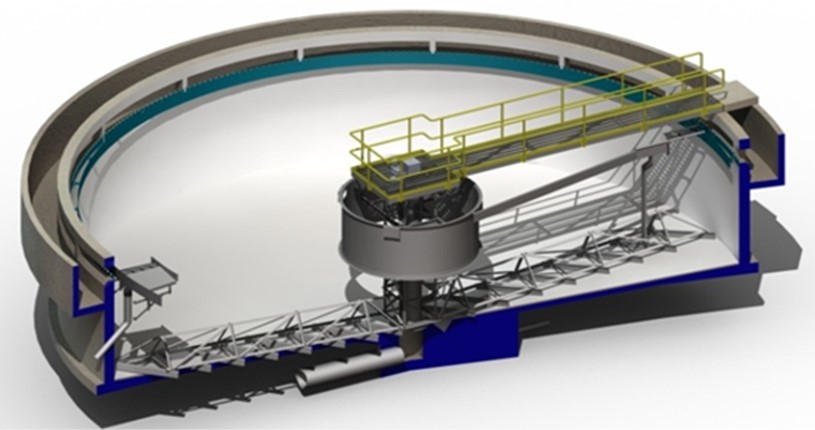
ClearStream develops a detailed 3D model for every unit manufactured, ensuring accurate fit-up and seamless integration with site-specific layouts. These models also serve as a valuable tool for operator training and system familiarization, providing clear insight into unit design and operation.
Clients are provided access to the 3D models, allowing them to view and manipulate the equipment from their own office or facility. This capability enables operations and maintenance personnel to virtually inspect the unit, plan maintenance activities, and understand internal components—without draining the tank or interrupting operation.