
1.What Is “Jet Aeration”?
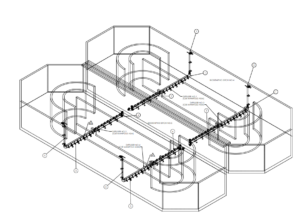
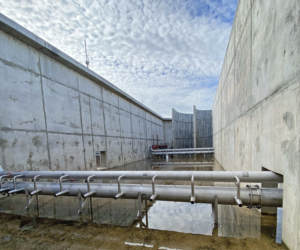
A motive pump recirculates basin liquid through a liquid manifold while a blower supplies low-pressure air through a separate air manifold. The two streams are distributed independently and combined at each jet aerator. The nozzle geometry accelerates the resulting air/liquid mixture, producing a high-energy plume that transfers oxygen while imparting hydraulic mixing energy to the basin.
The velocity of the jet promotes circulation and keeps biological solids suspended, while entrained air provides oxygen transfer to support biological treatment. Because the motive liquid and air are supplied separately, each can be adjusted based on the hydraulic and biological needs of the process.
This relatively simple operating principle allows jet aeration to provide both the mixing energy and oxygen transfer required for a wide range of biological treatment applications.
2. Why Separate Mixing From Oxygen Delivery?
Biological treatment systems rarely operate under one constant condition. Influent flow, organic loading, ammonia loading, temperature and oxygen demand can change significantly throughout the day and throughout the year.
With ClearFlo™ jet aeration, hydraulic mixing is provided by the motive liquid while oxygen delivery is controlled through the air system. Airflow can therefore be adjusted to match process demand without sacrificing the mixing energy needed to maintain solids suspension and basin circulation.
This separation also provides greater flexibility for biological nutrient removal. The same equipment can support aerobic treatment when air is supplied and transition to ungassed mixing when anoxic conditions are desired. Alternating operating conditions can be incorporated into process control strategies for nitrification, denitrification and biological phosphorus removal without requiring a separate mechanical mixing system for each treatment zone.
At the Northeast Brunswick Regional WRF, for example, ClearStream’s jet aeration system was designed not only to meet the required oxygen-transfer demand, but also to maintain biological floc and mixed liquor suspended solids in suspension with the airflow turned off.
3. What Makes Jet Aeration Robust and Easy to Operate?
Wastewater aeration equipment operates in a challenging environment. Stringy material, biological growth, grit and continuous exposure to wastewater can all contribute to maintenance requirements and equipment wear. ClearFlo™ jet aeration systems are designed with these conditions in mind.
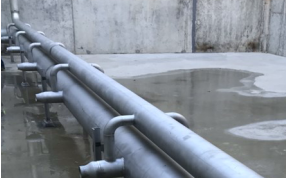
The submerged air and liquid manifolds, supports and jet assemblies are fabricated from stainless steel for long service life and corrosion resistance. Large-orifice jet nozzles provide an open flow path without the small openings associated with many diffuser systems. In the Northeast Brunswick installation, the non-clog nozzle design was specified to pass a 1.5-inch spherical solid and to be free of internal protrusions that could collect stringy material.
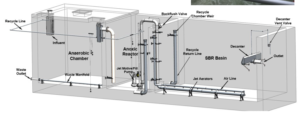
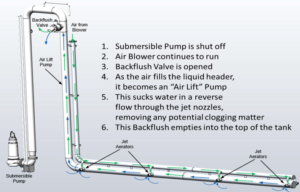
An integrated hydro-pneumatic backflush system allows the jet nozzles and liquid manifold to be cleaned in place. During backflush, the motive pump is stopped while the blower continues operating. Air filling the liquid header creates an air-lift effect that reverses flow through the jet nozzles, helping dislodge accumulated material and carry it out of the manifold. The process can be completed without draining the basin.
Another maintenance advantage is the absence of submerged rotating mechanical equipment. Motive pumps and blowers are located where they are readily accessible for inspection and maintenance, while the submerged components contain no bearings, gearboxes or other continuously rotating mechanical equipment.
Subsurface aeration provides additional operational benefits. Because air is released below the water surface, jet aeration produces no mechanical splashing and minimizes mist and spray around walkways and handrails. Reduced surface disturbance can also help conserve basin temperature during cold-weather operation.
Together, these features provide a system designed around straightforward operation: robust submerged components, accessible mechanical equipment and in-place cleaning capability.
4. Where can jet aeration be applied?
-
- Oxidation Ditches and Continuous Loop Reactors
Jet aeration can provide both the directional motive force needed to maintain circulation around a continuous-loop reactor and the oxygen required for biological treatment. Headers can be arranged to suit existing channel geometry, making the technology applicable to both new construction and retrofit applications.
The Northeast Brunswick Regional WRF provides one example. ClearStream supplied jet aeration equipment for two oxidation ditches with an 18-foot operating water depth. Four stainless-steel jet headers were incorporated into the two-basin system to provide mixing, directional circulation and oxygen transfer. The system was designed for oxygen-transfer requirements up to 500 lb O₂/hr per ditch while retaining the ability to maintain solids suspension during ungassed operation.
-
- Sequencing Batch Reactors and BNR Systems
Independent air and liquid control is particularly useful in processes that intentionally transition between biological conditions. In SBR and BNR applications, jet aeration can alternate between aerated and ungassed operation while maintaining mixing, supporting process strategies incorporating aerobic and anoxic treatment periods.
-
- Retrofit and Capacity Expansion
Existing facilities may also use jet aeration to supplement or replace aging mechanical aeration equipment. ClearStream’s DitchDr™ applies the same jet aeration principles in a prefabricated oxidation-ditch retrofit system, providing an option for facilities seeking additional aeration and mixing capacity or replacement of aging brush, rotor or other aeration equipment.
-
- Beyond the Biological Reactor
The ability to provide hydraulic mixing with or without air also makes jet systems useful beyond conventional activated-sludge aeration. Applications can include aerobic digesters, sludge storage, equalization basins, anoxic mixing, MBBR systems and industrial wastewater treatment.
Rather than being limited to a single reactor configuration, jet aeration provides a flexible platform that can be engineered around the basin geometry, oxygen demand and mixing requirements of the individual application.
A Flexible Approach to Aeration
Wastewater treatment conditions change. Aeration equipment should provide the flexibility to respond. By separating hydraulic mixing from oxygen delivery, ClearFlo™ jet aeration allows each to be controlled around the needs of the biological process. Combined with robust stainless-steel construction, accessible mechanical equipment and in-place backflushing, the result is an aeration platform that can be adapted to new treatment systems, existing facilities and changing process requirements.